The new Chrysler Ypsilon is a mix of segment-leading style, cutting edge technology, eye-catching design and world-class engines. All this is incorporated in a 3.8m long 5dr vehicle that's shorter than most of its rivals.
On sale in the UK now, the Ypsilon certainly isn't a conservative 'me-too' entry into the most hotly contested class of cars in Europe. It's a premium model in a small car's body; original, full of character and targeting drivers who appreciate quality, elegance and innovation in equal measure. It marks a resurgence for Chrysler Group LLC which was formed in 2009 as a strategic alliance with Fiat.
Chrysler's portfolio contains some of Europe's most recognisable vehicles, including the striking 300C saloon and top-selling Grand Voyager MPV. Now with the help of Fiat's experience and knowledge in the small and medium-sized car sectors, Chrysler can imbue compact, more environmentally friendly models with the luxurious character traits of its bigger cars.
Chrysler brand director Nigel Land says: "Through the launch of Ypsilon and Delta we now have a range that encompasses both the small and medium passenger car markets with vehicles that are notably well designed, ensuring that they really are credible alternatives to the mainstream. They are equipped with all the features you would expect from a large Chrysler, integrated with stylish European designed interiors."
As well as bringing the Chrysler name to the supermini segment, the Ypsilon introduces a host of new technologies. For the first time in this class of car, buyers will have access to a raft of large car features such as Magic Parking, xenon headlights, Blue&Me™-TomTom LIVE and the Smart Fuel System.
On top of that, depending on the trim level they choose, buyers will be able to specify automatic climate control, fog lights, 16-inch wheels, cruise control, a leather steering wheel with audio controls, dusk and rain sensors, parking sensors and a 500-watt surround sound music system.
The Chrysler Ypsilon has been designed to compete in the increasingly popular supermini sector. To do so successfully it must appeal to a wide range of buyers, from down-sizers looking for an economical but comfortable small car, to those aiming to move up to a more luxurious model that is still affordable to buy and run. With a five-door body shape that has the appearance of a sporty three door thanks to hidden rear door handles, the Ypsilon combines practicality with good looks.
For added reassurance, it's also one of the safest cars in its segment, featuring as standard up to six airbags, ABS anti-lock brakes with Electronic Brakeforce Distribution (EBD), Vehicle Dynamic Control (VDC - standard on Auto, optional on SE and Limited), Anti Slip Regulation (ASR), traction control and Hill Holder.
This is underpinned by a lightweight, super-strong and safe structure that sits on a new specially designed suspension. And beneath the bonnet there's a range of class-leading engines including the 2011 International Engine of the Year, the TwinAir. With its two distinct 'characters', this diminutive 0.9-litre turbo gives drivers the option of a sporting drive or class-leading economy in a lightweight package.
The Chrysler Ypsilon's engine range is completed by a zesty 1.2-litre petrol and a potent 1.3-litre turbo diesel, all of which come with Start&Stop as standard, and promise improved refinement combined with reduced emissions and consumption.
To give Ypsilon owners even more choice there will be three trim levels at launch: S, SE and Limited. But there's a huge choice of options in an almost limitless number of combinations, enabling drivers to give their car the personal touch. There's are 16 elegant paint combinations of which four are bi-colour; five different upholstery trims, and three types of alloy wheel.
Owners can personalise their cars further at Chrysler UK dealerships where they'll be able to order special wheels, add stylish piano black interior trim and buy special key fobs to give their car unique appeal.
Combined, all these facets ensure Chrysler Ypsilon owners will easily stand out from the crowd. And they'll enjoy a comfortable, chic and responsible city runabout that's wrapped up in cutting edge technology.
HIGH SPEC AS STANDARD
The Chrysler Ypsilon might look like a small three door, but it's actually a five-door, the configuration that makes up 77 per cent of the supermini market in the UK.
At just 384cm long and 167cm wide, the Ypsilon is smaller than many of its supermini rivals. Yet it has one of the largest luggage capacities in its segment and is one of the best in class when it comes to passenger space. It also has class-leading versatility thanks to its five-door hatchback design. And it manages to cloak all this in an exterior that exudes a uniquely elegant style for such a compact car. Setting the windscreen further forward creates the illusion of a larger, sleeker vehicle. It has also allowed the designers to make the luggage capacity larger.
The Chrysler Ypsilon's height, and therefore its generous head room, is disguised by two sweeping curves. The first takes the line of the bonnet and extends along the waistline, going up into the rear pillar. The second rises with the A pillar to follow the upper arch of the glass. It then drops to follow the outer edge of the tailgate window. It's a theme the Ypsilon shares with its big brother, the Delta.
The interplay between the concave and convex nature of the sides combines with rear door handles concealed in the C pillar to give this five door the appearance of a more compact 3dr car.
At the front, and unusually for a supermini, powerful, projector-type headlights sit either side of Chrysler's new shield grille. These give the car a sophisticated appearance and make it seem wider than it actually is. At the rear, LEDs are used to draw minimum power from the battery while creating the maximum impression. The lights have been developed with Magneti Marelli Automotive Lighting, and at the front feature integrated Daytime Running Lights (DRL) which automatically turn on when the engine is started. Finally, the rear reversing light and fog light sit below the back bumper, neatly protected from the knocks that go hand in hand with urban motoring.
Inside Ypsilon
The Chrysler Ypsilon was designed to give a large car feel in a small car shape and the interior embraces this philosophy.
The dashboard has a line that traces the curve of the windscreen and ties it into the door panels to give the cabin a feeling of extra width.
The materials don't just give the illusion of comfort. An all-new roof lining reduces noise inside the passenger compartment by 2 decibels (dB). To demonstrate the significance of that improvement, a reduction of 3dB equates to a 50 percent drop in noise. The rear seats, each with three-point seatbelts, have been designed to be as supportive as a larger car's. And the front pair use new 'slim seat' technology for the first time to increase leg space for rear passengers.
The cabin isn't just a restful place to be, it's bright as well. LEDs are used to illuminate the dashboard. And the main instruments sit in a central display above the console housing the entertainment and ventilation systems, to create an inclusive environment for driver and passengers alike.
But it's the Chrysler Ypsilon's level of equipment that makes it a benchmark vehicle in its segment. It's the first supermini to include Magic Parking, Blue&Me™-TomTom LIVE, the Smart Fuel System and innovative headlight clusters.
Magic Parking
Finding a parking place in towns and cities is frequently a patience-testing experience, so the Chrysler Ypsilon can be specified with the innovative Magic Parking system.
Pushing a button on the dashboard activates the system which then uses radar sensors mounted in the front bumpers combined with wheel speed sensors to measure the length of empty parking spaces. If it detects one that is free from obstacles and is the length of the car plus 40cm at either end, the driver is informed by a beeping noise and a message on the dash. If the driver decides to park in it, the car's computer takes over the steering while the driver retains control of the accelerator and brake and is permitted a speed of just over 4mph. The driver can deactivate the system at any time, either by turning the wheel, changing out of reverse gear or pressing the button on the dashboard.
Blue&Me™-TomTom LIVE
Every Chrysler Ypsilon can be specified with the latest and most versatile version of Fiat's award-winning Blue&Me™system.
Each car can be equipped with the fitting for Blue&Me™-TomTom LIVE. So even if owners don't specify it on purchase, they or future owners of their Ypsilon can buy it at a later date.
It's based on the TomTom Go1000 and features a touch screen that allows occupants to manage phone calls, satellite navigation and all the driver information required. It even allows control of a media player via the cutting edge next-generation touch screen.
It uses TomTom LIVE services which combine accurate traffic information, such as road closures or traffic jams, with dynamic route calculation. Chrysler Ypsilon customers will get a year's free subscription to LIVE. The removable screen sits in its special holder to the right of the steering wheel.
Other innovations
It's not just inside that the Chrysler Ypsilon is innovative. It also takes a step ahead of the competition with its Smart Fuel System. This device replaces the classic fuel cap and automatically opens and closes when the pump nozzle is put inside it. It makes refuelling easier and safer by reducing harmful gas emissions and fuel overflow. It also prevents 'misfuelling' as it's impossible to pump petrol into a diesel car (or vice versa) fitted with this system.
Setting itself further apart from rivals, new Ypsilon features a 360° 500-Watt sound system that's a unique factory fit option in such a small car. It consists of four 40W musical Dome tweeters, four 80W musical Neodymium mid-woofers and a digital eight-channel amplifier.
This then uses three signal processing methods simultaneously to increase the 'depth' and 'height' of the sound and equalise the stereophonic reproduction to produce a more enveloping experience for listeners.
All this equipment supplements a wide-range of standard kit. There's a height and reach-adjustable steering wheel, electric front windows, 60/40 (50/50 'S' model) split rear seat and height-adjustable driver's seat.
POWER AND ECONOMY COMBINED
The Chrysler Ypsilon benefits from some of the same cutting edge engine technology that has transformed Fiat Group Automobiles into one of the world's leading makers of environmentally friendly transport.
Three engine options are available, two petrol and one diesel. All come with the Start&Stop system as standard and all are Euro 5 emissions compliant. In the TwinAir model, a semi-automatic five-speed gearbox can be specified. All other models feature a five-speed manual transmission. All engines combine power with economy to ensure the Chrysler Ypsilon isn't just environmentally responsible and therefore economical to run, it's effortless to drive too.
1.2-litre Fire
The range starts with the latest evolution of the famous Fire engines family. This 1.2-litre eight-valve unit features continuously variable valve timing which optimises the opening and closing of the valves to ensure the engine still feels peppy while operating at maximum efficiency.
The engine develops a healthy 102Nm of torque at 3000rpm while power at 5500rpm is a respectable 69bhp. And thanks to Start&Stop, overall fuel consumption is reduced by 5 per cent while CO2 emissions are an impressively low 115g/km.
0.9-litre TwinAir
The other petrol engine available in the new Ypsilon is 2011's International Engine of the Year, the TwinAir. This combines Fiat Powertrain Technologies' (FPT) revolutionary MultiAir technology with a small capacity two-cylinder engine plus turbocharger.
The results are ground-breaking, giving the 875cc TwinAir more power (85bhp) and torque (145Nm) than the larger capacity 1.2-litre Fire engine. It is also more economical and at 97g/km (for the semi-automatic gearbox version), has the lowest CO2 emissions of any quantity production automotive petrol engine currently on sale.
The bedrock of the TwinAir is the MultiAir technology that underpins it. This system features electro-hydraulic valve management that reduces fuel consumption by controlling the air going into the engine via the inlet valves without using the throttle. It enables airflow to be managed cylinder by cylinder, cycle by cycle, phase by phase, according to the driver's and therefore the engine's requirements. By rigorously controlling the combustion process, pumping losses of around 10 per cent are eliminated, while valve control strategies can be optimised to reduce emissions and boost driveability through improved throttle responses.
The TwinAir also features an ECO button on the dashboard. By pressing it, torque is limited to 100Nm at 2000rpm for even greater increases in economy and reductions in emissions.
1.3-litre MultiJet
The third engine in the range is the lively 1.3-litre MultiJet II turbo-diesel with its 95bhp and 200Nm of torque at 1500rpm for effortless low speed cruising. This second generation engine is equipped with a variable geometry turbocharger, a new variable displacement engine oil pump and an alternator with 'smart charge'.
The engine features faster injectors than the first generation of its kind. Now with eight injections per cycle, it offers greater speed, flexibility and precision in its various phases of operation. By improving the combustion process in this way, operation is quieter while particulate and nitrogen oxide (NOX) emissions are lowered.
The injectors are also simpler and with 40 per cent fewer components they're more reliable than their predecessor, thereby promising cheaper running costs.
Economy isn't solely enhanced by the capable engine line-up. Chrysler has left no stone unturned in its efforts to make the Ypsilon as economical as possible. As a consequence, it sits on new generation low rolling resistance Goodyear EfficientGrip tyres. These use new materials to make them 10 per cent lighter. This results in 1.9 per cent better fuel economy, which Goodyear estimates could save a driver 30.6 litres of fuel over 12,500 miles. These tyres are also longer lasting and offer greater braking capability.
Every Chrysler Ypsilon is equipped with Start&Stop and a Gear Shift Indicator (GSI). Specifically designed for city driving, Start&Stop is like having an invisible co-pilot who automatically switches off the engine when the vehicle is stationary. But all the systems that guarantee comfort and safety on board, such as the lights, climate control and windscreen wipers, remain operational. When either the system detects that the battery needs some charge, or the driver dips the clutch to engage first gear, the engine fires automatically.
By cutting the engine when it isn't needed, Start&Stop saves up to 15 per cent in fuel over the urban cycle. The GSI meanwhile helps the driver to change gear at the optimum point for best fuel consumption.
TOP PRIORITY FOR SAFETY
The new Chrysler Ypsilon has been engineered from the ground up to be more cosseting than any car in its class. The secret of its success here lies in the suspension, which is all-new front and rear.
The MacPherson front suspension uses a lower arm made of ultra-high strength material, while a modular cross member is made from low thickness, high strength steel sheets. As well as improving comfort, this helps dissipate impact energy through the car to make the Ypsilon safer. The front suspension also features shock absorbers with split mountings to transmit loads to the body through two different routes to filter out road vibrations better, and improve acoustic performance.
A new anti-roll bar has had its weight reduced and been connected to the shock absorbers to maximise its anti-roll effect. Lastly, new bushes have been designed for the front suspension. These have a lower dynamic stiffening than previously to maximise comfort on bumpy roads and reduce noise. A torsion axle is fitted at the rear. With new bushes, this guarantees greater comfort on bumpy roads and improves noise insulation without affecting road holding.
High strength materials have also been employed in the Chrysler Ypsilon's body. These improve the car's energy absorption characteristics in both front and side impacts, but also make it lighter to benefit fuel economy.
Another safety innovation employed on the new Ypsilon is the third load path. In frontal impacts this transfers crash energy to the lower, more resistant parts of the vehicle. It increases the vehicle's ability to absorb frontal impacts, helps control deformation of the passenger cell, and reduces the chance of intrusion to the passenger compartment.
High performance tempered steel has been used for the front bumper cross member, while the lightweight strong plastic Xenoy has been employed on the rear bumper cross member. The energy absorption material behind the third load path is made of a special highly absorbent plastic. This minimises damage in low speed impacts and reduces the risk of knee damage in pedestrian collisions.
It's no accident that all these features combine to make the new Chrysler Ypsilon one of the safest cars in its class. It was designed at the Fiat Safety Centre, and information was gathered from all possible types of accident including front, rear and side impacts, roll overs, pile-ups and collisions with pedestrians. The varying speeds at which impacts occur were also accounted for, as well as obstacles the car might collide with, and the physical shape and size of occupants.
Initial testing was carried out by virtual means, involving more than 20,000 hours of mathematical modelling. The results were then confirmed with more than 80 crash tests, 100 tests on a HyGe Sled and about 100 tests on components and sub- systems.
The Ypsilon features a wealth of safety equipment as standard across the entire range. There is VDC vehicle dynamic control (standard on Auto and optional on SE and Limited versions), complete with ASR traction control plus Hill Holder, and ABS anti-lock braking with Electronic Brakeforce Distribution (EBD).
Inside, there are up to six airbags (two each on the front, window and side - S versions have four airbags) and front seat belts with double pretensioners and load limiters. There are three-point seat belts across the rear passenger accommodation, (two rear seats on S versions), making this a realistically safe five-seater. Both front and rear seats are fitted with an anti-submarining system to prevent the body from sliding underneath the seatbelt, and the front seats have an anti-whiplash system to reduce the risk of injury in rear end collisions. Finally, ISOFIX attachments, which allow child seats to be securely fitted, are standard.
ACCESSORISE ALL AREAS
There is an almost limitless combination of options to enable owners to personalise their Chrysler Ypsilon.
Three basic trim levels are available: S, SE and Limited. Even the entry-level S trim, which is only available with the 1.2-litre engine, is a very well equipped supermini. Standard equipment features height adjustable steering wheel, electric front windows, 50/50 split rear seat, height-adjustable driver's seat, 15-inch wheels, premium fabric upholstery and heated rear window, radio with CD and MP3 player, plus the full complement of safety kit.
In addition to that, SE specification adds manual climate control, electrically adjustable door mirrors, leather-trimmed steering wheel and gear-lever gaiter, and Castiglio upholstery available in either Romantic Gold or Urban Black designs.
Finally, with an eye very firmly on buyers who will be purchasing the new Ypsilon for its high specification, the Limited has rear electric windows, fog lights, 15-inch alloy wheels and leather upholstery.
Should owners want to customise their cars, there's an extensive range of quality accessories available to complement the new Ypsilon's bespoke nature. There are 16-inch alloy wheels, side skirts and tinted headlights plus door kick plates with illuminated logo.
To enhance the new Chrysler Ypsilon's already expressive design further, there's a stylish range of exterior paint trims, including bi-colour, which allows owners to specify varying bonnet and roof colours to make their car even more eye-catching. A total of 16 colours are available, including four Bi-colour, four Metallic, four Micalised, two Tri-coat and two Pastel.
Showing posts with label 2011. Show all posts
Friday, September 30, 2011
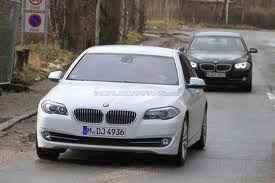
BMW 5 ActiveHybrid
BMW takes the development of intelligent hybrid drive systems to the next level with the introduction of the BMW 5 ActiveHybrid - another series-produced model in which a combustion engine and electric motor join forces to enhance both efficiency and the brand's hallmark driving pleasure. The BMW 5 ActiveHybrid brings together a BMW TwinPower Turbo six-cylinder in-line engine, an electric drive system and an eight-speed automatic gearbox for the first time. The latest generation of BMW ActiveHybrid technology also adds precisely controlled - and therefore extremely effective - energy management to the mix.
All of which gives the BMW 5 ActiveHybrid an exceptional balance of performance and fuel economy for the premium executive car class. Its drive system generates combined output of 250 kW/340 hp, allows the car to be driven on electric power alone up to 60 km/h (37 mph), accelerates the BMW 5 ActiveHybrid from 0 to 100 km/h (62 mph) in 5.9 seconds, limits average fuel consumption to between 6.4 and 7.0 litres per 100 kilometres (44 - 40 mpg imp) and has CO2 emissions of just 149 - 163 grams per kilometre (figures according to EU test cycle, may vary according to the tyre format specified).
The 225 kW/306 hp six-cylinder in-line engine with BMW TwinPower Turbo technology in the BMW 5 ActiveHybrid is the same unit renowned for its free-revving capability, pulling power and efficiency in the BMW 535i. The electric motor, meanwhile, develops 40 kW/55 hp and is supplied with energy by a high-performance lithium-ion battery integrated into the luggage area.
A harmonious blend of power from the two drive systems is transferred to the rear wheels by the eight-speed automatic gearbox. In addition to its full-hybrid construction, which enables purely electric and therefore emission-free driving in urban conditions, the BMW 5 ActiveHybrid boasts not only the sportiest performance in its market segment but also a double-digit percentage improvement in fuel economy over the BMW 535i.
In order to fully exploit the potential of the BMW ActiveHybrid technology, the intelligent energy management of the power electronics in the BMW 5 ActiveHybrid uses a host of innovative functions to ensure the drive system runs efficiently. The lithium-ion high-performance battery is charged when the car is coasting or braking, the electric motor performing the role of a generator feeding energy into the high-voltage battery. By contrast, under acceleration the electric motor takes on a boost function. Here, it assists the petrol engine by generating an ultra-dynamic burst of power, lending the sedan's sporty driving experience a noticeably sharper edge. Added to which, while coasting at speeds of up to 160 km/h (100 mph) in ECO PRO mode, the combustion engine can be switched off and fully decoupled. This coasting mode combines comfortable driving with optimum utilisation of the kinetic energy already generated. To avoid periods with the engine running at idle - at junctions or in traffic tailbacks, for example - the BMW 5 ActiveHybrid is equipped with a hybrid start-stop function. Plus, the power electronics in the BMW 5 ActiveHybrid are linked up with the standard-fitted navigation system Professional. This allows forward-looking analysis of the driving situation, enabling the drive components to be primed to deliver maximum efficiency (the effect may vary according to the quality of the available navigation data). All the hybrid-specific components of the drive technology and energy management systems have been developed specially for use in the BMW 5 ActiveHybrid. The result is an extremely well-rounded overall concept, which also provides a convincing demonstration of the BMW ActiveHybrid technology's qualities out on the road. Needless to say, all of the new hybrid components are designed to last for the life of the vehicle.
The BMW 5 ActiveHybrid sees the sporty yet elegant body design of the BMW 5-Series Sedan complemented by bespoke touches which highlight the identity of its drive technology. The "ActiveHybrid 5" lettering on the C-pillars, BMW kidney grille with galvanised slats and exhaust matt chrome tailpipes set the exterior apart from the other models in the range. Available as an option, meanwhile, are 18-inch Streamline light-alloy wheels displaying exceptional aerodynamic efficiency. The BMW 5 ActiveHybrid is the only model in the BMW 5-Series line-up to be available in the exterior paint shade Bluewater metallic, and it also stands out visually from all other 5-Series variants with door sill strips bearing "ActiveHybrid 5" lettering, an aluminium plate on the centre console with the same ID, a bespoke engine cover and the visible "ActiveHybrid Power Unit" inscription on the special casing for the high-performance battery accommodated in the luggage area.
The selection of interior colours, upholstery and interior trim elements reflect the range offered for the other BMW 5-Series Sedan variants. And added to the standard-fitted array of comfort-enhancing features is not only the navigation system Professional, but also a 4-zone climate control system with stationary air conditioning. A wide range of driver assistance systems and BMW ConnectedDrive mobility services, as well as virtually all the other optional extras available for the conventionally powered BMW 5-Series Sedan, can also be specified for the BMW 5 ActiveHybrid.
Innovative combination: award-winning six-cylinder in-line engine, newly developed electric drive system.
This is the first time that a six-cylinder in-line engine has been included as part of a BMW ActiveHybrid system. The 3.0-litre petrol unit, which develops 225 kW/306 hp and peak torque of 400 Newton metres (295 lb-ft), represents a passport to increased driving pleasure and efficiency. The BMW TwinPower Turbo technology of the six-cylinder engine, which has already won the international Engine of the Year Award two years in succession, comprises a twin-scroll turbocharger, High Precision Direct Injection and VALVETRONIC variable valve timing.
The synchronous electric motor of the BMW 5 ActiveHybrid is integrated into the housing of the eight-speed automatic gearbox, saving space. The link-up between the electric motor and gearbox is controlled by a clutch and the motor's operating temperature is regulated by the combustion engine's cooling system. The electric drive system develops 40 kW/55 hp and makes 210 Newton metres (155 lb-ft) of torque available from rest. The motor is supplied with energy by a lithium-ion high-performance battery, likewise specially developed for the BMW 5 ActiveHybrid. The high-voltage battery is encased in a special high-strength housing and positioned between the wheel arches in the luggage area, providing it with optimum protection. It consists of 96 cells, has its own cooling system and offers usable energy capacity of 675 Wh. The integration of the lithium-ion high-performance battery into the luggage area reduces the load capacity of the BMW 5 ActiveHybrid to 375 litres, 145 litres lower than that of a BMW 5-Series Sedan variant powered purely by a combustion engine.
The BMW 5 ActiveHybrid has both a conventional 14-volt power supply and a high-voltage supply with an operating voltage of 317 volts. They are linked up by a voltage transformer ensuring that maximum electric energy can be used to enhance driving dynamics and comfort in any operating phase. Like the electric motor, the air conditioning compressor is also fed with power from the lithium-ion high-performance battery exclusively via the high-voltage supply. This ensures a pleasant interior climate, even when the combustion engine is switched off - i.e. when the car is at a standstill, operating purely on electric power or in coasting mode. In addition, the stationary climate control function can be used to cool the interior before the engine is started up.
Intelligently controlled hybrid technology: unprecedented precision for superior efficiency.
Up to a speed of 60 km/h (37 mph), the BMW 5 ActiveHybrid can operate in all-electric mode for zero emissions in town. The lithium-ion high-voltage battery can store sufficient energy to give an all-electric driving range of up to four kilometres (approx. 2.5 miles) at an average speed of 35 km/h (22 mph).
The internal combustion engine is only started when the driver requires more power: it is then engaged automatically. The electric motor provides a "boost" function to supplement the engine when accelerating. Maximum combined power is 250 kW/340 hp, with maximum torque of 450 Newton metres. Under combined ICE/electric power, the BMW 5 ActiveHybrid delivers a 0 to 100 km/h (62 mph) acceleration time of 5.9 seconds.
Hybrid-specific Auto Start-Stop function and coasting mode.
Thanks to the specially designed Hybrid Auto Start-Stop function, there are no compromises on comfort even when the vehicle is stopped in traffic for longer periods - after the internal combustion engine is shut off, the automatic climate control simply runs off the lithium-ion battery. When the driver releases the brake, the vehicle will restart on either the electric motor alone or the electric motor and the petrol engine, depending on the high-voltage battery's current charge level and on how much power the driver wants.
Another innovation being pioneered in the BMW 5 ActiveHybrid further improves efficiency by shutting the internal combustion engine down not only when the vehicle is stationary, or when driving in town, but also on overrun. In the BMW 5 ActiveHybrid, this coasting mode is available at any speed up to 160 km/h (100 mph). Coasting mode switches off the petrol engine and disconnects it from the drive shaft. From this point on, the BMW 5 ActiveHybrid continues moving soundlessly, with zero emissions and with no engine braking effect. The potential efficiency improvements are further enhanced by tyres with reduced rolling resistance. In coasting mode too, as with all-electric mode for urban driving, all safety and comfort functions remain fully operational.
Intelligent energy management with proactive analysis of the driving situation.
The advanced power electronics coordinate the operation of the internal combustion engine and electric motor with precise reference to the driving situation. For even more efficient energy management in the BMW 5 ActiveHybrid, this functionality has been extended to include proactive analysis of the driving situation. To support this, the power electronics are integrated with the standard-fitted Professional navigation system, which means they can access and analyse data indicating an upcoming change in external conditions or driver requirements at a very early stage. Based on this analysis, the vehicle can be prepared in advance for the relevant requirements so that all powertrain systems and the on-board electronics are managed appropriately and in such a way as to make the most efficient possible use of the available energy.
Factors that may cause a change in powertrain operating strategy include the topography of the route and speed limits. For example, if the system knows that a hilly stretch is coming up soon, the BMW 5 ActiveHybrid can invest all the high-voltage battery's electrical energy in providing supplementary driving power, since the battery will be recharged "at no cost" during the subsequent descent. On longer downhill sections the electric motor's generator function, too, can be enlisted to recharge the high-voltage battery with no loss of speed. The operating strategy can also be managed so as to ensure that the high-voltage battery is as fully charged as possible when nearing the end of the journey, thereby increasing the electric driving range on the "last lap".
The operating status of the powertrain components is shown in intuitive, model-specific displays in the instrument cluster and in the Control Display of the BMW 5 ActiveHybrid. As well as the energy flow and energy recuperation display, these include a further gauge next to the rev counter which shows the boost effect being provided by the electric motor during acceleration. A display in the iDrive interface provides a variety of information - for example on the lithium-ion high-voltage battery's current charge level and the power-sharing between the internal combustion engine and the electric motor in the course of a journey.
Exceptional hybrid model, typical BMW 5-Series: highest standards of driving dynamics, safety and comfort.
The chassis specifications of the BMW 5 ActiveHybrid include a double-wishbone front axle and integral rear axle, electromechanical power steering including the Servotronic speed-sensitive power assist function, a high-performance brake system and 17-inch alloy wheels. Dynamic Damper Control, featuring electronically controlled damping, is optionally available. The Dynamic Stability Control (DSC) system, which stabilises the vehicle by applying braking pressure and reducing engine power, also incorporates functions such as Dynamic Traction Control (DTC), the Anti-lock Braking System (ABS), Cornering Brake Control (CBC), Dynamic Brake Control (DBC), Brake Assist, Fading Compensation, a Dry Braking function and Start-Off Assistant.
The hybrid-specific safety features, which protect the lithium-ion high-voltage battery and the power electronics, are integrated in the BMW 5-Series' elaborate integrated active and passive safety concept. In a collision, high-strength structural components and large deformation zones help to keep impact forces away from the passenger cell and also from the hybrid drive components. Other standard safety systems on the BMW 5 ActiveHybrid include front and side airbags, side curtain head airbags for both rows of seats, three-point inertia-reel belts on all seats, belt force limiters and belt latch tensioners on the front seats and ISOFIX child seat attachments in the rear.
In the BMW 5 ActiveHybrid, too, the standard-fitted Driving Experience Control switch offers not only Sport+, Sport and Comfort set-ups (as well as Comfort+ mode if the optional Dynamic Damper Control is specified), but also ECO PRO mode. The latter supports a particularly relaxed and fuel-efficient driving style, and makes more frequent use of all-electric mode. As an alternative to the standard-fitted automatic transmission, a sports automatic with faster shift times is optionally available.
BMW ConnectedDrive systems optionally available for the BMW 5 ActiveHybrid include Park Distance Control, a rear-view camera, Surround View, Adaptive Headlights, High-Beam Assistant, Speed Limit Info, BMW Parking Assistant, Lane Change Warning, Lane Departure Warning, BMW Night Vision with pedestrian recognition and the BMW Head-Up Display. Innovative technologies also allow in-car integration of the Apple iPhone, other smartphones and music players, and use of the Real-Time Traffic Information and Apps functions.
To further enhance comfort and individuality, the standard-specification 4-zone automatic climate control and navigation system Professional can be supplemented by options such as active seats, active seat ventilation, Comfort Access, the Smart Opener for the tailgate, the Soft Close Automatic function for the doors, a power-operated glass roof and high-end audio and rear entertainment systems.
BMW 5 ActiveHybrid: intelligent technology points the way forward.
The BMW 5 ActiveHybrid features newly developed hybrid components that are combined for the first time with a six-cylinder BMW TwinPower Turbo engine, and innovative functions for further improved efficiency and driving enjoyment. At the same time it broaches yet another market segment, taking BMW's hybrid development work a further step forward. As always, BMW ActiveHybrid technology is offered in a form which is optimally adapted to the requirements of the particular vehicle concept and market segment.
All of which gives the BMW 5 ActiveHybrid an exceptional balance of performance and fuel economy for the premium executive car class. Its drive system generates combined output of 250 kW/340 hp, allows the car to be driven on electric power alone up to 60 km/h (37 mph), accelerates the BMW 5 ActiveHybrid from 0 to 100 km/h (62 mph) in 5.9 seconds, limits average fuel consumption to between 6.4 and 7.0 litres per 100 kilometres (44 - 40 mpg imp) and has CO2 emissions of just 149 - 163 grams per kilometre (figures according to EU test cycle, may vary according to the tyre format specified).
The 225 kW/306 hp six-cylinder in-line engine with BMW TwinPower Turbo technology in the BMW 5 ActiveHybrid is the same unit renowned for its free-revving capability, pulling power and efficiency in the BMW 535i. The electric motor, meanwhile, develops 40 kW/55 hp and is supplied with energy by a high-performance lithium-ion battery integrated into the luggage area.
A harmonious blend of power from the two drive systems is transferred to the rear wheels by the eight-speed automatic gearbox. In addition to its full-hybrid construction, which enables purely electric and therefore emission-free driving in urban conditions, the BMW 5 ActiveHybrid boasts not only the sportiest performance in its market segment but also a double-digit percentage improvement in fuel economy over the BMW 535i.
In order to fully exploit the potential of the BMW ActiveHybrid technology, the intelligent energy management of the power electronics in the BMW 5 ActiveHybrid uses a host of innovative functions to ensure the drive system runs efficiently. The lithium-ion high-performance battery is charged when the car is coasting or braking, the electric motor performing the role of a generator feeding energy into the high-voltage battery. By contrast, under acceleration the electric motor takes on a boost function. Here, it assists the petrol engine by generating an ultra-dynamic burst of power, lending the sedan's sporty driving experience a noticeably sharper edge. Added to which, while coasting at speeds of up to 160 km/h (100 mph) in ECO PRO mode, the combustion engine can be switched off and fully decoupled. This coasting mode combines comfortable driving with optimum utilisation of the kinetic energy already generated. To avoid periods with the engine running at idle - at junctions or in traffic tailbacks, for example - the BMW 5 ActiveHybrid is equipped with a hybrid start-stop function. Plus, the power electronics in the BMW 5 ActiveHybrid are linked up with the standard-fitted navigation system Professional. This allows forward-looking analysis of the driving situation, enabling the drive components to be primed to deliver maximum efficiency (the effect may vary according to the quality of the available navigation data). All the hybrid-specific components of the drive technology and energy management systems have been developed specially for use in the BMW 5 ActiveHybrid. The result is an extremely well-rounded overall concept, which also provides a convincing demonstration of the BMW ActiveHybrid technology's qualities out on the road. Needless to say, all of the new hybrid components are designed to last for the life of the vehicle.
The BMW 5 ActiveHybrid sees the sporty yet elegant body design of the BMW 5-Series Sedan complemented by bespoke touches which highlight the identity of its drive technology. The "ActiveHybrid 5" lettering on the C-pillars, BMW kidney grille with galvanised slats and exhaust matt chrome tailpipes set the exterior apart from the other models in the range. Available as an option, meanwhile, are 18-inch Streamline light-alloy wheels displaying exceptional aerodynamic efficiency. The BMW 5 ActiveHybrid is the only model in the BMW 5-Series line-up to be available in the exterior paint shade Bluewater metallic, and it also stands out visually from all other 5-Series variants with door sill strips bearing "ActiveHybrid 5" lettering, an aluminium plate on the centre console with the same ID, a bespoke engine cover and the visible "ActiveHybrid Power Unit" inscription on the special casing for the high-performance battery accommodated in the luggage area.
The selection of interior colours, upholstery and interior trim elements reflect the range offered for the other BMW 5-Series Sedan variants. And added to the standard-fitted array of comfort-enhancing features is not only the navigation system Professional, but also a 4-zone climate control system with stationary air conditioning. A wide range of driver assistance systems and BMW ConnectedDrive mobility services, as well as virtually all the other optional extras available for the conventionally powered BMW 5-Series Sedan, can also be specified for the BMW 5 ActiveHybrid.
Innovative combination: award-winning six-cylinder in-line engine, newly developed electric drive system.
This is the first time that a six-cylinder in-line engine has been included as part of a BMW ActiveHybrid system. The 3.0-litre petrol unit, which develops 225 kW/306 hp and peak torque of 400 Newton metres (295 lb-ft), represents a passport to increased driving pleasure and efficiency. The BMW TwinPower Turbo technology of the six-cylinder engine, which has already won the international Engine of the Year Award two years in succession, comprises a twin-scroll turbocharger, High Precision Direct Injection and VALVETRONIC variable valve timing.
The synchronous electric motor of the BMW 5 ActiveHybrid is integrated into the housing of the eight-speed automatic gearbox, saving space. The link-up between the electric motor and gearbox is controlled by a clutch and the motor's operating temperature is regulated by the combustion engine's cooling system. The electric drive system develops 40 kW/55 hp and makes 210 Newton metres (155 lb-ft) of torque available from rest. The motor is supplied with energy by a lithium-ion high-performance battery, likewise specially developed for the BMW 5 ActiveHybrid. The high-voltage battery is encased in a special high-strength housing and positioned between the wheel arches in the luggage area, providing it with optimum protection. It consists of 96 cells, has its own cooling system and offers usable energy capacity of 675 Wh. The integration of the lithium-ion high-performance battery into the luggage area reduces the load capacity of the BMW 5 ActiveHybrid to 375 litres, 145 litres lower than that of a BMW 5-Series Sedan variant powered purely by a combustion engine.
The BMW 5 ActiveHybrid has both a conventional 14-volt power supply and a high-voltage supply with an operating voltage of 317 volts. They are linked up by a voltage transformer ensuring that maximum electric energy can be used to enhance driving dynamics and comfort in any operating phase. Like the electric motor, the air conditioning compressor is also fed with power from the lithium-ion high-performance battery exclusively via the high-voltage supply. This ensures a pleasant interior climate, even when the combustion engine is switched off - i.e. when the car is at a standstill, operating purely on electric power or in coasting mode. In addition, the stationary climate control function can be used to cool the interior before the engine is started up.
Intelligently controlled hybrid technology: unprecedented precision for superior efficiency.
Up to a speed of 60 km/h (37 mph), the BMW 5 ActiveHybrid can operate in all-electric mode for zero emissions in town. The lithium-ion high-voltage battery can store sufficient energy to give an all-electric driving range of up to four kilometres (approx. 2.5 miles) at an average speed of 35 km/h (22 mph).
The internal combustion engine is only started when the driver requires more power: it is then engaged automatically. The electric motor provides a "boost" function to supplement the engine when accelerating. Maximum combined power is 250 kW/340 hp, with maximum torque of 450 Newton metres. Under combined ICE/electric power, the BMW 5 ActiveHybrid delivers a 0 to 100 km/h (62 mph) acceleration time of 5.9 seconds.
Hybrid-specific Auto Start-Stop function and coasting mode.
Thanks to the specially designed Hybrid Auto Start-Stop function, there are no compromises on comfort even when the vehicle is stopped in traffic for longer periods - after the internal combustion engine is shut off, the automatic climate control simply runs off the lithium-ion battery. When the driver releases the brake, the vehicle will restart on either the electric motor alone or the electric motor and the petrol engine, depending on the high-voltage battery's current charge level and on how much power the driver wants.
Another innovation being pioneered in the BMW 5 ActiveHybrid further improves efficiency by shutting the internal combustion engine down not only when the vehicle is stationary, or when driving in town, but also on overrun. In the BMW 5 ActiveHybrid, this coasting mode is available at any speed up to 160 km/h (100 mph). Coasting mode switches off the petrol engine and disconnects it from the drive shaft. From this point on, the BMW 5 ActiveHybrid continues moving soundlessly, with zero emissions and with no engine braking effect. The potential efficiency improvements are further enhanced by tyres with reduced rolling resistance. In coasting mode too, as with all-electric mode for urban driving, all safety and comfort functions remain fully operational.
Intelligent energy management with proactive analysis of the driving situation.
The advanced power electronics coordinate the operation of the internal combustion engine and electric motor with precise reference to the driving situation. For even more efficient energy management in the BMW 5 ActiveHybrid, this functionality has been extended to include proactive analysis of the driving situation. To support this, the power electronics are integrated with the standard-fitted Professional navigation system, which means they can access and analyse data indicating an upcoming change in external conditions or driver requirements at a very early stage. Based on this analysis, the vehicle can be prepared in advance for the relevant requirements so that all powertrain systems and the on-board electronics are managed appropriately and in such a way as to make the most efficient possible use of the available energy.
Factors that may cause a change in powertrain operating strategy include the topography of the route and speed limits. For example, if the system knows that a hilly stretch is coming up soon, the BMW 5 ActiveHybrid can invest all the high-voltage battery's electrical energy in providing supplementary driving power, since the battery will be recharged "at no cost" during the subsequent descent. On longer downhill sections the electric motor's generator function, too, can be enlisted to recharge the high-voltage battery with no loss of speed. The operating strategy can also be managed so as to ensure that the high-voltage battery is as fully charged as possible when nearing the end of the journey, thereby increasing the electric driving range on the "last lap".
The operating status of the powertrain components is shown in intuitive, model-specific displays in the instrument cluster and in the Control Display of the BMW 5 ActiveHybrid. As well as the energy flow and energy recuperation display, these include a further gauge next to the rev counter which shows the boost effect being provided by the electric motor during acceleration. A display in the iDrive interface provides a variety of information - for example on the lithium-ion high-voltage battery's current charge level and the power-sharing between the internal combustion engine and the electric motor in the course of a journey.
Exceptional hybrid model, typical BMW 5-Series: highest standards of driving dynamics, safety and comfort.
The chassis specifications of the BMW 5 ActiveHybrid include a double-wishbone front axle and integral rear axle, electromechanical power steering including the Servotronic speed-sensitive power assist function, a high-performance brake system and 17-inch alloy wheels. Dynamic Damper Control, featuring electronically controlled damping, is optionally available. The Dynamic Stability Control (DSC) system, which stabilises the vehicle by applying braking pressure and reducing engine power, also incorporates functions such as Dynamic Traction Control (DTC), the Anti-lock Braking System (ABS), Cornering Brake Control (CBC), Dynamic Brake Control (DBC), Brake Assist, Fading Compensation, a Dry Braking function and Start-Off Assistant.
The hybrid-specific safety features, which protect the lithium-ion high-voltage battery and the power electronics, are integrated in the BMW 5-Series' elaborate integrated active and passive safety concept. In a collision, high-strength structural components and large deformation zones help to keep impact forces away from the passenger cell and also from the hybrid drive components. Other standard safety systems on the BMW 5 ActiveHybrid include front and side airbags, side curtain head airbags for both rows of seats, three-point inertia-reel belts on all seats, belt force limiters and belt latch tensioners on the front seats and ISOFIX child seat attachments in the rear.
In the BMW 5 ActiveHybrid, too, the standard-fitted Driving Experience Control switch offers not only Sport+, Sport and Comfort set-ups (as well as Comfort+ mode if the optional Dynamic Damper Control is specified), but also ECO PRO mode. The latter supports a particularly relaxed and fuel-efficient driving style, and makes more frequent use of all-electric mode. As an alternative to the standard-fitted automatic transmission, a sports automatic with faster shift times is optionally available.
BMW ConnectedDrive systems optionally available for the BMW 5 ActiveHybrid include Park Distance Control, a rear-view camera, Surround View, Adaptive Headlights, High-Beam Assistant, Speed Limit Info, BMW Parking Assistant, Lane Change Warning, Lane Departure Warning, BMW Night Vision with pedestrian recognition and the BMW Head-Up Display. Innovative technologies also allow in-car integration of the Apple iPhone, other smartphones and music players, and use of the Real-Time Traffic Information and Apps functions.
To further enhance comfort and individuality, the standard-specification 4-zone automatic climate control and navigation system Professional can be supplemented by options such as active seats, active seat ventilation, Comfort Access, the Smart Opener for the tailgate, the Soft Close Automatic function for the doors, a power-operated glass roof and high-end audio and rear entertainment systems.
BMW 5 ActiveHybrid: intelligent technology points the way forward.
The BMW 5 ActiveHybrid features newly developed hybrid components that are combined for the first time with a six-cylinder BMW TwinPower Turbo engine, and innovative functions for further improved efficiency and driving enjoyment. At the same time it broaches yet another market segment, taking BMW's hybrid development work a further step forward. As always, BMW ActiveHybrid technology is offered in a form which is optimally adapted to the requirements of the particular vehicle concept and market segment.
Thursday, September 29, 2011
Mazda MX-5 Miata Special Edition
The Mazda Minagi concept car embodies Mazda's new SkyActiv technologies and new KODO design language, signaling the way for the next generation of Mazda cars to come.
The Mazda Minagi concept makes its world premiere at the 2011 Geneva Motor Show as the expression of Mazda's new SkyActiv technologies and new KODO design language. It is the first model which showcases characteristics likely to be seen in the next generation of Mazda cars.
For this reason, Mazda has fully incorporated its SkyActiv technologies into every aspect of driving performance, including the powertrain, chassis, and even body design. As the second concept vehicle to incorporate Mazda's new 'KODO - Soul of Motion' design language, Minagi challenges conventions with emotional design and exhilarating performance.
While Shinari was a pure design concept to express the full potential of KODO design, Mazda Minagi gives a glimpse of the next generation of products to come. As the second concept car to adopt Mazda's KODO design theme, Minagi's design elements combine the expression of energy pulsing throughout the vehicle with the keen agility to move about freely and nimbly. With its upright, compact packaging, Mazda Minagi offers a vision of KODO design that is different to Shinari, yet it shares the same sinuous, powerful stance.
"I wanted to convey something different from the Mazda Shinari. I felt a compact crossover SUV was the perfect vehicle to express agility and focused movement; the flexibility of four limbs moving in unison, and an upright posture."
The Mazda Minagi is a stylish expression of pent-up energy. In Japanese, its name conjures up the image of an object pulsating with energy and perfectly reflects the vehicle's speed, agility and spirited character. For Minagi, Mazda designers looked at different aspects of cheetahs as they hunt. A cheetah's head is positioned high, while long, powerful and supple limbs hold its lean torso upright to enable it to change direction quickly at high speed. Mazda's designers set out to evoke the moment when an animal contracts its muscles, ready to sprint and lunge at its prey. Furthermore, such a lunge can be in any direction; an idea which fits with the function of an agile crossover SUV as it nimbly darts through a sprawling cityscape.
Major features of the Mazda Minagi Concept
An urban-friendly compact crossover SUV which combines emotional design with exhilarating performance
The Mazda Minagi concept makes its world premiere at the 2011 Geneva Motor Show as the expression of Mazda's new SkyActiv technologies and new KODO design language. It is the first model which showcases characteristics likely to be seen in the next generation of Mazda cars.
For this reason, Mazda has fully incorporated its SkyActiv technologies into every aspect of driving performance, including the powertrain, chassis, and even body design. As the second concept vehicle to incorporate Mazda's new 'KODO - Soul of Motion' design language, Minagi challenges conventions with emotional design and exhilarating performance.
While Shinari was a pure design concept to express the full potential of KODO design, Mazda Minagi gives a glimpse of the next generation of products to come. As the second concept car to adopt Mazda's KODO design theme, Minagi's design elements combine the expression of energy pulsing throughout the vehicle with the keen agility to move about freely and nimbly. With its upright, compact packaging, Mazda Minagi offers a vision of KODO design that is different to Shinari, yet it shares the same sinuous, powerful stance.
"I wanted to convey something different from the Mazda Shinari. I felt a compact crossover SUV was the perfect vehicle to express agility and focused movement; the flexibility of four limbs moving in unison, and an upright posture."
The Mazda Minagi is a stylish expression of pent-up energy. In Japanese, its name conjures up the image of an object pulsating with energy and perfectly reflects the vehicle's speed, agility and spirited character. For Minagi, Mazda designers looked at different aspects of cheetahs as they hunt. A cheetah's head is positioned high, while long, powerful and supple limbs hold its lean torso upright to enable it to change direction quickly at high speed. Mazda's designers set out to evoke the moment when an animal contracts its muscles, ready to sprint and lunge at its prey. Furthermore, such a lunge can be in any direction; an idea which fits with the function of an agile crossover SUV as it nimbly darts through a sprawling cityscape.
Major features of the Mazda Minagi Concept
An urban-friendly compact crossover SUV which combines emotional design with exhilarating performance
- Mazda Minagi is the first concept car to fully adopt Mazda's SkyActiv technologies and new 'KODO - Soul of Motion' design and it represents Mazda's next generation of products
- Mazda's unique compact crossover SUV for urban explorers fuses emotional design - which conveys a lively ability to quickly leap into action and head in any direction - with the driving pleasure and outstanding environmental and safety performance of SkyActiv technologies
- KODO design elements adopted by this compact crossover SUV express pulsating energy and a nimble ability to move about freely
- The vehicle's crouched stance expresses the image of a cheetah as it stands with its weight poised on its hind legs, ready to lunge at its prey
- The cargo bay of conventional SUVs often resembles a vehicle wearing a backpack, whereas Minagi presents an image of a muscular entity that cleanly incorporates spaciousness within well-toned lines
- Placing the A-pillar rearward emphasizes the rearward orientation of the cabin. This stands in sharp contrast to the single-arc silhouette of frontward A-pillar placement on minivans, and emphasizes the driving position - a priority for the design of the Mazda Minagi concept
- The cabin's position relative to the lower body is further back than on conventional SUVs. This emphasizes the motion expressed in Minagi's form
- The chromed 'signature wing' on the front fascia, shared with Shinari, makes Minagi immediately recognizable as a Mazda and creates a strong impression
- Angling the front grille slightly downwards, while juxtaposing the headlamp housings design to slant upward, creates intensity
- Adding more dynamic contours to the prominent front fenders - highly characteristic of Mazda cars - expresses KODO design language's forceful sense of accumulating, then instantly releasing pent-up energy. These elements combine with the dynamic form of the rear fenders further emphasizing the wheels, which form the legs of this predator
- Sculpted lines along the sides of Mazda Minagi's body accentuate a sense of power which suggest the supple strength of a cheetah. These contours extend and connect with the rear fender in an expression which suggests the powerful musculature that joins the cheetah's shoulders and hips to its legs
- The overall effect is a graceful and beautiful form which directs the eye from front-to-rear
- The character line that flows along the lower part of Minagi's side panels symbolizes KODO's sense of power being accumulated, then quickly released
- The rear fenders project boldly outward to create a wide, stable stance befitting an SUV
- The contrast between the rear fenders and the taut lines of the car's rear end mimics the strong and seductive hip line of a toned athlete
- As with Shinari, the chromed 'signature wing' that sweeps up from the bottom of the front grille disappears into the center of the headlamp housings dramatically
- The design of the three-dimensional headlamp and rear combination lamps add a heightened sense of depth
- The line of the 'signature wing' element and the headlamp design combine to express the intense look of a wild animal's gaze
- Mazda's designers set out to realize a driver-focused cockpit and cabin environment that expresses a reassuringly high level of strength and solidity. The interior employs quality materials along with the superior fit and finish of detailed hand craftsmanship
- The above features add to the anticipation of the driving pleasure to come by creating a refined and quality cabin environment
- The main black interior colour is highlighted by the colour red in the rear seatbacks and at the bottom of the door armrests
- Four upright satin chrome struts appear to support the instrument panel, each rising upward in an image of vertical strength which appears to defy gravity, underscoring the impression that Minagi's occupants are securely protected
- The design of the instrument cluster and surrounding switches emphasizes the snug, sporty nature of the driver-focused cockpit while expressing Mazda's sporty ethos
Mazda CX9
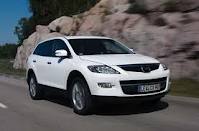
Mazda CX9 provides SUV roominess and comfort for six on the inside, with a sleek appearance that has high emotional appeal. This effect is created by a silhouette with a flat windscreen angle, thin tapered windows, large fenders and a rising belt line. At the front, the new CX9 emphasises power and build quality with a big front bumper, sleek headlamps with silver-look edges that wrap into the fenders, and a sculptured bonnet. The rear design features a five-point rear window and a large rear bumper for stability and strength. To this it adds sporty touches like a roof spoiler, dual trapezoidal exhaust pipes and 10-spoke, 20-inch aluminium alloy wheels (depending on market). Insightful details like the silver-look mouldings for the lamps, the chrome used for the grille bar and front intake areas and available turning signals in the side mirrors, all add a sense of prestige to owning a new Mazda CX9.
Interior Design - Roominess and Quality
Despite looking more like a sports car than an SUV on the outside, on the inside Mazda CX9 uses its full size - with a length of 5,089 mm, a width of 1,936 mm and height of 1,728 mm - to deliver SUV roominess, high quality craftsmanship and materials. Occupants are greeted by decorative, wood-like embellishments on each side of the centre console and at both ends of the dashboard. The cockpit has a driver cluster with black-out meters, indirect illumination and silver rings. Its leather seats (depending on market and grade) have a sporty look, are firm and durable, with high-quality stitching and are matched to trim materials with superior quality feel and silver accents throughout. Two interior colour packages are available, in either black or sand.
The new Mazda CX9 offers a long list of standard features. This includes an all-new 3.7-litre V6 engine coupled to a 6-speed automatic transmission with manual shift mode and Active Torque-Split all-wheel drive. Also available (depending on market) are a burglar alarm, privacy windows, power windows front and back, power adjustable and heated front seats and driver's seat memory function (for up to five settings). Other available features include three-zone heating and air conditioning, a premium BOSE®, 10 speaker 277 W audio system with Centerpoint® surround system and AudioPilot® noise compensation, rain sensor and auto light systems, and an Advanced keyless entry and start system for unlocking all four doors automatically from outside the car. The card key also operates the power rear liftgate. Combined with the high level of craftsmanship and build quality of Mazda's flagship SUV, and you have an overall package that stands out in the non-premium SUV segment.
Superior NVH for a Quiet Cabin
All these features can be enjoyed to the fullest, because CX9's cabin is designed to be quiet and relaxing, even at cruising speed on the motorway. Its new V6 engine and automatic transmission are smooth and quiet (see Powertrain below). And it supplements this with noise-suppressing foam applied at 22 locations in the body shell - the most of any Mazda vehicle ever - and various structural technologies which effectively dampen road and wind noise from reaching the cabin.
Roominess, Comfort and Seat Variability
The dynamic exterior of the Mazda CX9 is not achieved by sacrificing SUV comfort and seat flexibility. With one of the segment's longest wheelbases (2,875 mm), the Mazda CX9 offers space for a maximum of six people. The cockpit is designed to support this by being easy to use and practical. The steering wheel is both tilt and telescopically adjustable. The leather driver's seat is power adjustable for slide and height, has electric lumbar support adjustment and a seat position memory system that can store up to three different driving positions and two additional positions using the two card keys - and the front passenger seat is power adjustable as well. The shift lever of the six-speed automatic transmission is positioned high at the front of the floor console where it can be easily operated in either automatic or manual modes, and the steering wheel has audio controls and cruise control (depending on market). This is combined with large and comfortable back seats that can be folded individually to create a large load space. There is even a handy strap at the back of both third row seats that lets you fold them into the floor and lets you pull it back up again. And of course practical storage compartments can be found everywhere in the cabin. There is a large front floor console that comes with an auxiliary jack (AUX) for hooking up and playing an MP3 player using the car's premium audio system; and a 12-volt power outlet that can be used to recharge the batteries of your notebook, mobile phone and other electrical equipment.
Powertrain - Smooth and Powerful
The powertrain for the Mazda CX9 was chosen specifically to support the vehicle's high quality look and feel with an exhilarating yet sophisticated driving experience. Under the bonnet is a new MZI 3.7-litre V6 petrol engine that produces 204 kW/273 HP (SAE-NET) of maximum power at 6,250 rpm, and a robust 366 Nm of torque at 4,250 rpm - making it the most powerful engine in the Mazda line-up.
This 60° short-stroke V6 has a die-cast aluminium block with cast-in iron cylinder lines and aluminium cylinder heads - for minimal weight and high durability - and it adds advanced engine technologies to optimally combine performance with acceptable fuel consumption. These include sequential valve timing (S-VT) for optimised engine torque at all speeds. It also has a high compression ratio of 10.3:1 and electronic throttle control, which helps provides instant response to pedal input for lots of driving fun. Two catalytic converters make sure the Mazda CX9 meets Euro Stage IV emission standards.
Yet despite its fun-to-drive nature, the MZI 3.7-litre V6 has low NVH levels for a crossover SUV. To achieve this, a highly rigid cylinder block is used to reduce engine vibration, the side frame engine mounts are reinforced to reduce transmission vibration, and the forged-steel crankshaft has a dual-mass damper for smooth operation. Camshaft vibration is kept to a minimum by the use of sprockets with rubber cushion rings, and the intake manifold is designed to reduce intake air undulation and resistance.
Six-Speed Automatic Transmission with Manual Shift Mode
These engine technologies are combined with a six- speed automatic transmission with manual shift mode as standard equipment. This transmission provides an optimal balance between acceleration, ride comfort and quietness. Broad gear ratios ensure lively acceleration and smooth, powerful cruising speed, while the top two gears are laid out as overdrive, which helps save fuel when driving on the motorway. In automatic mode, it delivers a sporty shift feel and quick response to pedal input, and near manual-like shift characteristics in manual shift modes, for the best of both worlds.
Chassis & Safety - Responsive and Safe
Mazda CX9's stiff body shell and chassis systems - combined with the smooth, cultivated power of its V6 engine - make for an exciting driving experience not usually found on an SUV this size. And these superior dynamic attributes play a major role in making the CX9 something special in its class.
Zoom-Zoom Handling
The Mazda CX9 body shell has a highly rigid structure in the lower body with multiple cross members under the floor, a reinforced upper body area at the C-pillar, a high-tensile steel B-pillar and special roof reinforcements. This structure is made even more robust by the incorporation of crossing seat frames between the cross member of the floor and by the use of more laser spot welds and weld bonds than most of its competitors. All this results in high torsional and flexural rigidity, which delivers superior stability and Zoom-Zoom handling - without making Mazda's flagship SUV unduly heavy.
Its McPherson strut front suspension uses a 6-point rubber mount perimeter frame. This gives strong support and a sharp, linear feel to its hydraulic power assist rack-and-pinion steering system. The multi-link rear suspension employs one trailing arm and two lateral locating members on each side, and a rear frame with two rubber mounts on each side. The connecting points of the trailing arms are placed higher than usual, which further improves their stability during braking. The link layout is optimised to provide consistent wheel alignment when external forces are acting on the rear suspension, for predictable handling.
Superior Traction - Mazda's Active Torque-Split All-Wheel Drive
A main contributor to the predictable handling of the Mazda CX9 is its Active Torque-Split All-Wheel Drive system that provides traction in all road situations. Based on the system used by the Mazda CX-7; it monitors road conditions, ABS/DSC operating conditions, wheel speed and engine operation to optimise torque between the front and rear wheels (between 100:0 and 50:50). Depending on these factors, the system automatically selects snow mode or normal mode, and torque is distributed to the front and rear wheels by the coupling unit for optimised traction.
High Levels of Safety
Mazda CX9 is also one of the safest SUVs. Active safety features include a high seating position for great all around visibility, large front and rear ventilated disc brakes (320 mm and 325 mm respectively) combined with roll stability control (RSC), ABS, emergency brake assist (EBA), electronic brake-force distribution (EBD) and DSC (depending on market and grade). The foundation for Mazda CX9's passive safety system is its body shell. Using high-tensile steel and large-section body members, it disperses impact energy away from the passengers and keeps body deformation to a minimum during a collision. Also onboard is a special front sub-frame extension designed to help prevent the front of the Mazda CX9 from climbing up the front of an on-coming vehicle in a head-on collision. Passengers are further protected by front, side and three- row curtain airbags (depending on market and grade), three-point seat belts with pretensioners and load-limiters for the front seats, a collapsible brake pedal and specially designed front head restraints that help reduce possible neck injuries during a rear impact. No wonder the Mazda CX9 received the highest possible ranking of five stars on frontal and side impact crash testing from the U.S. government's National Highway Traffic Safety Administration (NHTSA), and a four-star rollover resistance rating.
Interior Design - Roominess and Quality
Despite looking more like a sports car than an SUV on the outside, on the inside Mazda CX9 uses its full size - with a length of 5,089 mm, a width of 1,936 mm and height of 1,728 mm - to deliver SUV roominess, high quality craftsmanship and materials. Occupants are greeted by decorative, wood-like embellishments on each side of the centre console and at both ends of the dashboard. The cockpit has a driver cluster with black-out meters, indirect illumination and silver rings. Its leather seats (depending on market and grade) have a sporty look, are firm and durable, with high-quality stitching and are matched to trim materials with superior quality feel and silver accents throughout. Two interior colour packages are available, in either black or sand.
The new Mazda CX9 offers a long list of standard features. This includes an all-new 3.7-litre V6 engine coupled to a 6-speed automatic transmission with manual shift mode and Active Torque-Split all-wheel drive. Also available (depending on market) are a burglar alarm, privacy windows, power windows front and back, power adjustable and heated front seats and driver's seat memory function (for up to five settings). Other available features include three-zone heating and air conditioning, a premium BOSE®, 10 speaker 277 W audio system with Centerpoint® surround system and AudioPilot® noise compensation, rain sensor and auto light systems, and an Advanced keyless entry and start system for unlocking all four doors automatically from outside the car. The card key also operates the power rear liftgate. Combined with the high level of craftsmanship and build quality of Mazda's flagship SUV, and you have an overall package that stands out in the non-premium SUV segment.
Superior NVH for a Quiet Cabin
All these features can be enjoyed to the fullest, because CX9's cabin is designed to be quiet and relaxing, even at cruising speed on the motorway. Its new V6 engine and automatic transmission are smooth and quiet (see Powertrain below). And it supplements this with noise-suppressing foam applied at 22 locations in the body shell - the most of any Mazda vehicle ever - and various structural technologies which effectively dampen road and wind noise from reaching the cabin.
Roominess, Comfort and Seat Variability
The dynamic exterior of the Mazda CX9 is not achieved by sacrificing SUV comfort and seat flexibility. With one of the segment's longest wheelbases (2,875 mm), the Mazda CX9 offers space for a maximum of six people. The cockpit is designed to support this by being easy to use and practical. The steering wheel is both tilt and telescopically adjustable. The leather driver's seat is power adjustable for slide and height, has electric lumbar support adjustment and a seat position memory system that can store up to three different driving positions and two additional positions using the two card keys - and the front passenger seat is power adjustable as well. The shift lever of the six-speed automatic transmission is positioned high at the front of the floor console where it can be easily operated in either automatic or manual modes, and the steering wheel has audio controls and cruise control (depending on market). This is combined with large and comfortable back seats that can be folded individually to create a large load space. There is even a handy strap at the back of both third row seats that lets you fold them into the floor and lets you pull it back up again. And of course practical storage compartments can be found everywhere in the cabin. There is a large front floor console that comes with an auxiliary jack (AUX) for hooking up and playing an MP3 player using the car's premium audio system; and a 12-volt power outlet that can be used to recharge the batteries of your notebook, mobile phone and other electrical equipment.
Powertrain - Smooth and Powerful
The powertrain for the Mazda CX9 was chosen specifically to support the vehicle's high quality look and feel with an exhilarating yet sophisticated driving experience. Under the bonnet is a new MZI 3.7-litre V6 petrol engine that produces 204 kW/273 HP (SAE-NET) of maximum power at 6,250 rpm, and a robust 366 Nm of torque at 4,250 rpm - making it the most powerful engine in the Mazda line-up.
This 60° short-stroke V6 has a die-cast aluminium block with cast-in iron cylinder lines and aluminium cylinder heads - for minimal weight and high durability - and it adds advanced engine technologies to optimally combine performance with acceptable fuel consumption. These include sequential valve timing (S-VT) for optimised engine torque at all speeds. It also has a high compression ratio of 10.3:1 and electronic throttle control, which helps provides instant response to pedal input for lots of driving fun. Two catalytic converters make sure the Mazda CX9 meets Euro Stage IV emission standards.
Yet despite its fun-to-drive nature, the MZI 3.7-litre V6 has low NVH levels for a crossover SUV. To achieve this, a highly rigid cylinder block is used to reduce engine vibration, the side frame engine mounts are reinforced to reduce transmission vibration, and the forged-steel crankshaft has a dual-mass damper for smooth operation. Camshaft vibration is kept to a minimum by the use of sprockets with rubber cushion rings, and the intake manifold is designed to reduce intake air undulation and resistance.
Six-Speed Automatic Transmission with Manual Shift Mode
These engine technologies are combined with a six- speed automatic transmission with manual shift mode as standard equipment. This transmission provides an optimal balance between acceleration, ride comfort and quietness. Broad gear ratios ensure lively acceleration and smooth, powerful cruising speed, while the top two gears are laid out as overdrive, which helps save fuel when driving on the motorway. In automatic mode, it delivers a sporty shift feel and quick response to pedal input, and near manual-like shift characteristics in manual shift modes, for the best of both worlds.
Chassis & Safety - Responsive and Safe
Mazda CX9's stiff body shell and chassis systems - combined with the smooth, cultivated power of its V6 engine - make for an exciting driving experience not usually found on an SUV this size. And these superior dynamic attributes play a major role in making the CX9 something special in its class.
Zoom-Zoom Handling
The Mazda CX9 body shell has a highly rigid structure in the lower body with multiple cross members under the floor, a reinforced upper body area at the C-pillar, a high-tensile steel B-pillar and special roof reinforcements. This structure is made even more robust by the incorporation of crossing seat frames between the cross member of the floor and by the use of more laser spot welds and weld bonds than most of its competitors. All this results in high torsional and flexural rigidity, which delivers superior stability and Zoom-Zoom handling - without making Mazda's flagship SUV unduly heavy.
Its McPherson strut front suspension uses a 6-point rubber mount perimeter frame. This gives strong support and a sharp, linear feel to its hydraulic power assist rack-and-pinion steering system. The multi-link rear suspension employs one trailing arm and two lateral locating members on each side, and a rear frame with two rubber mounts on each side. The connecting points of the trailing arms are placed higher than usual, which further improves their stability during braking. The link layout is optimised to provide consistent wheel alignment when external forces are acting on the rear suspension, for predictable handling.
Superior Traction - Mazda's Active Torque-Split All-Wheel Drive
A main contributor to the predictable handling of the Mazda CX9 is its Active Torque-Split All-Wheel Drive system that provides traction in all road situations. Based on the system used by the Mazda CX-7; it monitors road conditions, ABS/DSC operating conditions, wheel speed and engine operation to optimise torque between the front and rear wheels (between 100:0 and 50:50). Depending on these factors, the system automatically selects snow mode or normal mode, and torque is distributed to the front and rear wheels by the coupling unit for optimised traction.
High Levels of Safety
Mazda CX9 is also one of the safest SUVs. Active safety features include a high seating position for great all around visibility, large front and rear ventilated disc brakes (320 mm and 325 mm respectively) combined with roll stability control (RSC), ABS, emergency brake assist (EBA), electronic brake-force distribution (EBD) and DSC (depending on market and grade). The foundation for Mazda CX9's passive safety system is its body shell. Using high-tensile steel and large-section body members, it disperses impact energy away from the passengers and keeps body deformation to a minimum during a collision. Also onboard is a special front sub-frame extension designed to help prevent the front of the Mazda CX9 from climbing up the front of an on-coming vehicle in a head-on collision. Passengers are further protected by front, side and three- row curtain airbags (depending on market and grade), three-point seat belts with pretensioners and load-limiters for the front seats, a collapsible brake pedal and specially designed front head restraints that help reduce possible neck injuries during a rear impact. No wonder the Mazda CX9 received the highest possible ranking of five stars on frontal and side impact crash testing from the U.S. government's National Highway Traffic Safety Administration (NHTSA), and a four-star rollover resistance rating.
Skoda Yeti 4x4
People do not tire of talking about the mythical creature, white fur and sharp teeth, living in the mountains of ice. Although they have never met, people still speak with great conviction of their meeting with residents of peace high spin, which is said to show the soul loses many regional lines of eternal ice security of the valley below. Å koda Auto celebrated a new member of our models, which have been given names that help people, snow: The Skoda Yeti launched. selection name does have a deeper meaning. The Skoda Yeti strong, was made to move under difficult conditions and assist passengers with where others give up. But it has the advantage over the original Yeti: Unlike him, it is also fun in warmer regions, find its way not only in difficult terrain and off road, but with the same confidence and security on the road.
This is the aim of the designers had in mind when developing Skoda Yeti, five in the range of Å koda models incorporate the virtues which so far has been directed by a car in a completely different segment, but does not exist in a single vehicle. In other words, handling and comfort of driving mid-range classic, combined with brilliant off-road capabilities. That the vehicle shall also provide a space above average, high capacity and a high towing capacity increased its share further.
The results mark a new chapter in the history of Å koda very diverse. Although in the past there were some off-road vehicles in the Å koda brand long-established, they have never even remotely meet the high demands of compliance without compromise to drive on normal roads and off road is not Skoda Yeti.
The important first all-terrain Å koda prototype of the Skoda Superb 3000 – Kfz 15 (Type 956). From 1942 to 1943, was constructed as a sedan with a 3.1-liter, in-line six-cylinder engine and four-wheel drive. Type 973 off-road vehicles built from 1952 to 1956 and leave a trail thanks to the relevance of off-road, wading depth of 600 mm, the ability to climb 85 per cent and very good handling on the road.
This is the aim of the designers had in mind when developing Skoda Yeti, five in the range of Å koda models incorporate the virtues which so far has been directed by a car in a completely different segment, but does not exist in a single vehicle. In other words, handling and comfort of driving mid-range classic, combined with brilliant off-road capabilities. That the vehicle shall also provide a space above average, high capacity and a high towing capacity increased its share further.
The results mark a new chapter in the history of Å koda very diverse. Although in the past there were some off-road vehicles in the Å koda brand long-established, they have never even remotely meet the high demands of compliance without compromise to drive on normal roads and off road is not Skoda Yeti.
The important first all-terrain Å koda prototype of the Skoda Superb 3000 – Kfz 15 (Type 956). From 1942 to 1943, was constructed as a sedan with a 3.1-liter, in-line six-cylinder engine and four-wheel drive. Type 973 off-road vehicles built from 1952 to 1956 and leave a trail thanks to the relevance of off-road, wading depth of 600 mm, the ability to climb 85 per cent and very good handling on the road.
Monday, September 12, 2011
Nicky Heyden Open-aperture Problem New Ducati
It is no secret that manufacturers have a model Ducati motorcycles latest streetfighter. The model is called the Ducati 848. Manufacturer based in Bologna is still clamped information about the new champ.
But not for Nicky Heyden, when stopped by the headquarters of the Italian motorcycle manufacturer compatriot Valentino Rossi on the Ducati team looks forward slightly leaking Ducati 848 Streetfighter. U.S. rider was also propagate through social networking Twitter by writing # droppingonmonday.
Leaked given Nicky Heyden shows bright yellow color on the fender, engine cover and front lamp covers. Also visible are clamped double disc brake calipers and Brembo Shockbreaker model upside down.
Ducati plans to display the motor is intact in the event the Milan Motor Show which takes place next November. But the news had spread, Ducati does not make many changes in this new motor, but certainly every new model that will be displayed Ducati always attract attention.
But not for Nicky Heyden, when stopped by the headquarters of the Italian motorcycle manufacturer compatriot Valentino Rossi on the Ducati team looks forward slightly leaking Ducati 848 Streetfighter. U.S. rider was also propagate through social networking Twitter by writing # droppingonmonday.
Leaked given Nicky Heyden shows bright yellow color on the fender, engine cover and front lamp covers. Also visible are clamped double disc brake calipers and Brembo Shockbreaker model upside down.
Ducati plans to display the motor is intact in the event the Milan Motor Show which takes place next November. But the news had spread, Ducati does not make many changes in this new motor, but certainly every new model that will be displayed Ducati always attract attention.
Friday, September 2, 2011
Audi S6 Avant
Athletic character, quiet understatement and richly appointed - Audi is remaking the Audi S6 and S6 Avant. Both models are sports cars for everyday use, offering uncompromising practicality. Their new engine, a four-liter, twin-turbo V8, combines ample power with low fuel consumption in keeping with the times.
Drive
The Audi S6 and S6 Avant use the 309 kW (420 hp) version of the new 4.0 TFSI. The twin-turbo V8 provides a constant 550 Nm (405.66 lb-ft) of torque from 1,400 to 5,300 rpm. It accelerates the S6 from 0 to 100 km/h (62.14 mph) in 4.8 seconds and the S6 Avant in 4.9 seconds. With both models, the electronically governed top speed of 250 km/h (155.34 mph) is just a formality.
The 4.0 TFSI brings Audi's downsizing strategy to the high-performance class. Compared to the engine in the previous model, the free-breathing, 5.2-liter V10, it offers even sportier performance while reducing fuel consumption by as much as 25 percent. Average fuel consumption is just 9.7 liters per 100 km (24.25 US mpg) in the Audi S6 and 9.8 liters (24.0 US mpg) in the Audi S6 Avant, well below that of the competition.
A number of technologies contribute to this top result, including the recuperation and start-stop systems as well as the new "cylinder on demand" cylinder management system. When the V8 deactivates four cylinders under part load, the Active Noise Cancellation system (ANC) is activated. Four microphones integrated into the headlining record the noise in the cabin, which is then analyzed by a computer. If the computer detects intrusive sound elements, it broadcasts an antiphase sound through the speakers of the sound system. This sound combines with the intrusive sound and largely cancels it out.
Drive
The Audi S6 and S6 Avant use the 309 kW (420 hp) version of the new 4.0 TFSI. The twin-turbo V8 provides a constant 550 Nm (405.66 lb-ft) of torque from 1,400 to 5,300 rpm. It accelerates the S6 from 0 to 100 km/h (62.14 mph) in 4.8 seconds and the S6 Avant in 4.9 seconds. With both models, the electronically governed top speed of 250 km/h (155.34 mph) is just a formality.
The 4.0 TFSI brings Audi's downsizing strategy to the high-performance class. Compared to the engine in the previous model, the free-breathing, 5.2-liter V10, it offers even sportier performance while reducing fuel consumption by as much as 25 percent. Average fuel consumption is just 9.7 liters per 100 km (24.25 US mpg) in the Audi S6 and 9.8 liters (24.0 US mpg) in the Audi S6 Avant, well below that of the competition.
A number of technologies contribute to this top result, including the recuperation and start-stop systems as well as the new "cylinder on demand" cylinder management system. When the V8 deactivates four cylinders under part load, the Active Noise Cancellation system (ANC) is activated. Four microphones integrated into the headlining record the noise in the cabin, which is then analyzed by a computer. If the computer detects intrusive sound elements, it broadcasts an antiphase sound through the speakers of the sound system. This sound combines with the intrusive sound and largely cancels it out.
Jeep Wrangler
Jeep introduces the all-new 3.6-liter Pentastar V-6 petrol engine that will be equipped on the 2012 Jeep Wrangler and Jeep Wrangler Unlimited. 3.6-liter V-6 powertrain provides more fuel efficiency, improved on-road driving dynamics and refinement, more power and more torque. Petrol powertrain now adds upgraded automatic transmission for refined shifting and greater performance. Dramatically improved on-road performance combines with even more off-road prowess. New petrol engine joins 2.8-liter turbo diesel engine for European lineup.In Europe, the all-new 3.6-liter petrol powertrain will be introduced on Jeep Wrangler and Jeep Wrangler Unlimited Sport, Sahara and Rubicon trim levels starting November 2011.3.6-liter Pentastar V-6 EngineCompact and lightweight, the all-aluminum 3.6-liter Pentastar V-6 engine is more than 40 kg (90 lbs) lighter than the previous 3.8-liter V-6 engine that was constructed with a cast-iron block. The Pentastar engine is extremely quiet, constructed with a high-pressure, die-cast aluminum block fitted with cast-iron bore liners and aluminum cylinder heads. The engine also has been designed to meet all known future worldwide emission standards and is currently Euro 5 certified.The 3.6-liter V-6 engine is manufactured at the Trenton engine plant in Michigan (USA).TransmissionsThe A580 automatic transmission benefits Jeep Wrangler as much as the new petrol engine, with more refined shifting and gear selection. By increasing the number of speeds, the transmission allows the engine to operate in a more efficient RPM range, which helps increase fuel economy. More speeds also enable the engine to remain in the torque curve, increasing acceleration. The new Wrangler (two-door) boasts a 37-percent improvement in 0 - 100 km/h time, which is now 8.1 seconds. Also, a lower first-gear ratio in the new automatic transmission gives the Wrangler more off-road capability via a lower overall crawl ratio.Electronic Range Select is standard for all automatic-equipped Jeep Wrangler models. The electronic stability control (ESC) also has been optimized to perform effortlessly with the new 3.6-liter V-6 engine.Along with the proven NSG 370 six-speed manual transmission, engineered for the newest Jeep Wrangler are a new clutch housing, flywheel and long-travel damper clutch. The improvements are a result of the adaptation of the transmission to the 3.6-liter V-6 engine.The five-speed automatic transmission is produced in Kokomo, Indiana (ITP2), and the six-speed manual transmission is produced in Gaggenau, Germany.EngineeringJeep Wrangler delivers unmatched off-road capability with legendary four-wheel drive and is produced with more than seven decades of 4x4 engineering experience behind it. Wrangler continues to offer a body-on-frame design, front and rear five-link suspension system, live axles and electronic lockers.Jeep Wrangler now offers a choice of two transmissions: a six-speed manual and a five-speed automatic gearbox.Along with a new powertrain, Jeep engineers have thoroughly optimized ride and sound characteristics of the Jeep Wrangler's body-on-frame design. New motor and transmission adaptations and revised suspension calibrations contribute to overall improvements that are immediately evident both on- and off-road.The interior sound quality is greatly improved through refinements in the powertrain mounting system, noise damping in the firewall and the inclusion of the first Jeep Wrangler engine cover to effectively isolate the cabin from noises emulating from the engine and road surfaces.On the outside, engine noise is barely perceptible at idle. With the new 3.6-liter V-6 engine, all accessories are mounted directly to the engine with no accessory brackets. This helps ensure that all accessories, including the power steering pump, alternator and air conditioning compressor, are anchored firmly and less susceptible to vibration and noise.Shocks have also been retuned and are designed for optimum balance between advanced on-road handling and rugged off-road capability.Axles and Transfer CasesThe Jeep Wrangler is now available with more axle gear ratios, allowing customers to optimize fuel economy and/or vehicle capability. Wrangler is available with 3.21, 3.73 or 4.10 ratios depending on model. Also, Jeep Wrangler offers towing capability up to 2,500 kg.The capable driveline of the Sport and Sahara models includes a Dana 30 front axle and Dana 44 rear axle. The Command-Trac® NV241 part-time, two-speed transfer case features a 2.72:1 low-range gear ratio.The Rubicon model features heavy-duty Dana 44 front and rear axles and the Rock-Trac® NV241 two-speed transfer case with a 4.0:1 low-range gear ratio. Rubicon also includes electric front and rear locking differentials and disconnecting front sway bar, taking Jeep Wrangler to the highest level of capability.2.8-liter CRD EngineThe all-new 3.6-liter V-6 engine joins the new 2.8-liter turbo diesel engine with fuel-saving Stop/Start technology. The diesel engine provides power of 200 hp DIN (147 kW), a 13-percent improvement over the prior 2.8-liter diesel engine. Torque for the engine comes in at 410 N•m (302 lb-ft) with its six-speed manual transmission and 460 N•m (339 lb-ft) with its five-speed automatic transmission.Jeep Wrangler's diesel engine, when paired with the manual transmission, incorporates Stop/Start technology - the first application of this technology on a Chrysler Group vehicle. Stop/Start improves fuel efficiency and reduces CO2 emissions by managing the amount of time the engine runs. With Stop/Start, the engine is shut off when the vehicle is stopped, the shift gear is in Neutral and the clutch is released. The engine then restarts automatically when the clutch pedal is depressed. Drivers can deactivate the technology via a button on the dashboard, and an icon displays in the instrument panel to indicate the Stop/Start status.
Audi A8 Hybrid
2012 Audi A8 Hybrid Release - Audy A8 Hybrid finally released to the market to jazz up the fight Green Luxury Sedan. The car is ever present as a concept car in the event the Geneva Motor Show in 2010, appeared similar to the regular A8. Audi A8 Hybrid is not undergone many changes, but this four-door luxury cars would be the most efficient car in its class.
For exterior A8 Hybrid comes with LED Daytime Running Lights typical Audi shaped like wings, the presence of the logo ‘Hybrid’ on the back, and the use of 10-spoke alloy wheels. In the cabin still looks the same as the regular version, there are only a few small differences, such as the use of three-wheel bars, tachometers spiked with green color and distinctive Audi MMI system that displays the condition of the car battery on the screen measures 8 inches. A8 Hybrid has, AC 3 zones that turn on automatically, and the concoction Bose sound system that produces quality sound.
For machinery, A8 Hybrid uses technology TFSI engine to the body A8 Hybrid. This sophisticated machine with a capacity of 2,000 cc, 4 cylinder engine capable of producing 211 hp power. This machine is accompanied by the spraying power electric motors 54 hp. And if the engine and electric motor work together will generate power of 245 hp. Power is channeled through the 8-speed Tiptronic transmission. For fuel consumption below 6.4 liters per 10 kilometers. If you rely on electric power, this car can reach a maximum speed of 100 kph in a high speed.
Sunday, August 28, 2011
Audi Urban Spyder Concept
Audi is once again opening up new horizons: the Audi urban concept is a 1+1-seat, ultra-light car for congested urban spaces. The technical study being presented at the 2011 International Motor Show (IAA) in Frankfurt does not fit under any of the conventional categories - the Audi urban concept combines elements of a racing car, a fun car and an urban car into one radical new concept. In addition to a Sportback model, Audi is also presenting a Spyder variant.
The Audi urban concept is not based on any previous model - its development is solely oriented on the strict principles of lightweight construction, efficiency and reduction. The result is a concept car with no unnecessary weight, and one that concentrates on the pure essence of sporty motion.
The Audi urban concept has a sleek body. The wheels are free-standing, their surrounding protective plates feature blinking strips of LED lights. The highly concentrated look of the technical study, with its forward-urging lines, is dynamic and emotional - it lends Audi's design language a completely new impetus.
On board there is room for two people, their position slightly staggered and at a sporty, low level. All controls and materials are subject to the dictates of ultra-lightweight construction in order to ensure that the sensory experience they convey is unique and compelling. The driver can adjust the steering wheel and pedals to his own body measurements. Characteristic features of the Spyder include its low, continuous window area and its doors that open diagonally to the top.
The technology in the Audi urban concept reflects the full capabilities of the brand, especially when it comes to ultra-lightweight construction. The cockpit consists of carbon fiber-reinforced polymer, which integrates the undercarriage of both seats. The Audi urban concept rolls on wheels with a 21-inch diameter.
Two e-tron electric motors provide the propulsion - providing the ultra-light Audi urban concept with the ability to accelerate powerfully. A lithium-ion battery supplies the energy - ideal for extended city tours.
The Audi urban concept is not based on any previous model - its development is solely oriented on the strict principles of lightweight construction, efficiency and reduction. The result is a concept car with no unnecessary weight, and one that concentrates on the pure essence of sporty motion.
The Audi urban concept has a sleek body. The wheels are free-standing, their surrounding protective plates feature blinking strips of LED lights. The highly concentrated look of the technical study, with its forward-urging lines, is dynamic and emotional - it lends Audi's design language a completely new impetus.
On board there is room for two people, their position slightly staggered and at a sporty, low level. All controls and materials are subject to the dictates of ultra-lightweight construction in order to ensure that the sensory experience they convey is unique and compelling. The driver can adjust the steering wheel and pedals to his own body measurements. Characteristic features of the Spyder include its low, continuous window area and its doors that open diagonally to the top.
The technology in the Audi urban concept reflects the full capabilities of the brand, especially when it comes to ultra-lightweight construction. The cockpit consists of carbon fiber-reinforced polymer, which integrates the undercarriage of both seats. The Audi urban concept rolls on wheels with a 21-inch diameter.
Two e-tron electric motors provide the propulsion - providing the ultra-light Audi urban concept with the ability to accelerate powerfully. A lithium-ion battery supplies the energy - ideal for extended city tours.
Thursday, August 25, 2011
Porsche 911 Carrera
Porsche is proud to present the new Porsche 911 Carrera, a completely new generation of the iconic coupe that has been acclaimed as one of the world's benchmark sports cars since its launch in 1963.
Tradition meets modernity
True to the 911 tradition, the distinctive Porsche design language exudes power and elegance. The unmistakable silhouette still catches the eye while incorporating new, exciting contours and precisely designed details; a 100mm longer wheelbase for improved stability and greater interior space; front and rear overhangs are shorter, maintaining the compact footprint that has been a longstanding 911 attribute; the sporting stance is emphasised by the lower roof line and a wider front track increases on-road presence further still while raising the renowned chassis dynamics.
The rear-mounted, flat six cylinder engine is an equally symbolic component of the 911 identity; and behind the rear axle of the new car lies an uprated range of powerful, efficient and evocative 'boxer' engines. The Porsche 911 Carrera is powered by a new 3.4-litre engine developing 350 hp, and the Carrera S features a 400 hp version of the familiar 3.8-litre. These new engines offer performance improvements for both models. The 3.4-litre Carrera with PDK accelerates from 0-62mph in 4.6 sec, 0.1 sec quicker than the prior model. Pressing the Sport Plus button on the optional Sport Chrono Pack cuts that to 4.4 sec. The 3.8-litre Carrera S with PDK can accelerate from 0- 62 mph in 4.3 sec (Sport Plus 4.1 sec), 0.2sec quicker than its predecessor.
Tradition meets modernity
True to the 911 tradition, the distinctive Porsche design language exudes power and elegance. The unmistakable silhouette still catches the eye while incorporating new, exciting contours and precisely designed details; a 100mm longer wheelbase for improved stability and greater interior space; front and rear overhangs are shorter, maintaining the compact footprint that has been a longstanding 911 attribute; the sporting stance is emphasised by the lower roof line and a wider front track increases on-road presence further still while raising the renowned chassis dynamics.
The rear-mounted, flat six cylinder engine is an equally symbolic component of the 911 identity; and behind the rear axle of the new car lies an uprated range of powerful, efficient and evocative 'boxer' engines. The Porsche 911 Carrera is powered by a new 3.4-litre engine developing 350 hp, and the Carrera S features a 400 hp version of the familiar 3.8-litre. These new engines offer performance improvements for both models. The 3.4-litre Carrera with PDK accelerates from 0-62mph in 4.6 sec, 0.1 sec quicker than the prior model. Pressing the Sport Plus button on the optional Sport Chrono Pack cuts that to 4.4 sec. The 3.8-litre Carrera S with PDK can accelerate from 0- 62 mph in 4.3 sec (Sport Plus 4.1 sec), 0.2sec quicker than its predecessor.
Friday, August 19, 2011
Pagani Zonda Tricolore
Pagani Automobili created the Pagani Zonda Tricolore on the occasion of the celebration of the 50th Anniversary of the "Frecce Tricolori", as a tribute to the National Aerobatic Team.
In 2010 the aerobatic season of the Frecce Tricolori comes to its 50th anniversary, wich will be celebrated on 11th and 12th September at Rivolto Airport.
The Frecce Tricolori (Italian, literally Tricolour Arrows), officially known as the 313th Aerobatic Training Squadron is the demonstration team of the Italian Air Force, based at Rivolto Air Force Base, in the north-eastern Italian region of Friuli Venezia-Giulia, province of Udine. They were formed in 1961 as an Air Force team, replacing previous teams that had been sponsored by various commands by the end of the 1920s.
The team flies the Aermacchi MB-339-A/PAN, a two-seat aircraft capable of 898 km/h at sea level, with nine aircraft and a solo (the highest number of aircraft of any aerobatic team in the world).
The Frecce Tricolori belong to the legacy of the entire Italian community.
Pagani Zonda Tricolore Technical Specifications
In 2010 the aerobatic season of the Frecce Tricolori comes to its 50th anniversary, wich will be celebrated on 11th and 12th September at Rivolto Airport.
The Frecce Tricolori (Italian, literally Tricolour Arrows), officially known as the 313th Aerobatic Training Squadron is the demonstration team of the Italian Air Force, based at Rivolto Air Force Base, in the north-eastern Italian region of Friuli Venezia-Giulia, province of Udine. They were formed in 1961 as an Air Force team, replacing previous teams that had been sponsored by various commands by the end of the 1920s.
The team flies the Aermacchi MB-339-A/PAN, a two-seat aircraft capable of 898 km/h at sea level, with nine aircraft and a solo (the highest number of aircraft of any aerobatic team in the world).
The Frecce Tricolori belong to the legacy of the entire Italian community.
Pagani Zonda Tricolore Technical Specifications
- Mercedes Benz AMG engine, Power: 670 hp, Torque: 780 Nm
- Carbon-titanium monocoque
- ECU, Traction control, ABS by Bosch Engineering
- Inconel/titanium exhaust system coated with ceramic
- Suspensions in magnesium and titanium
- Cima sequential gearbox (6 speed), robotized by Automac enginnering
- APP monolitic wheels forged in aluminium and magnesium
- front 9x19
- rear 12,5x20
- Pirelli PZero tyres
- front 255/35/19
- rear 335/30/20
- Brembo brakes in carbo-ceramic self ventilated with hydraulic servo brake
- front 380x34 mm, monolitic 6 piston caliper
- rear 380x34 mm, monolitic 4 piston caliper
- Dry weight 1.210 kg
- Weight distribution in driving condition: 47% front, 53% rear
- Acceleration
- 0-100 km/h in 3.4 s
- 0-200 km/h in 9.6 s
- Braking
- 100-0 km/h in 2.1 s
- 200-0 km/h 4.3 s
- Maximum side acceleration: 1,45 G (with road tyres)
- Downforce at 300 kph: 750 kg
Cadillac Ciel Concept
The Cadillac Ciel Concept - pronounced "C-L," the French translation for sky - is a four-seat convertible that opens a new chapter in Cadillac's design and product ascent, pushing the brand's Art & Science philosophy into a new stratum. Ciel is a new expression of Cadillac's historical grandeur, as well as a celebration of open-air motoring.
"Large, expressive luxury is innate to Cadillac and the Ciel recalls that heritage, while suggesting where the brand can go in the future," said Clay Dean, global design director for Cadillac. "Authentic luxury is driven by experiences, not just products, and Ciel is about the experience of the journey."
The spacious and elegant Cadillac Ciel Concept is a grand gesture that explores themes driving Cadillac's explorations into range-topping flagship luxury. It is powered by a twin-turbocharged version of the 3.6-liter Direct Injection V-6 engine, paired with a hybrid system using lithium-ion battery technology.
Coastal inspiration
Driving California's Highway 1 in an open car while the sun sets, from Big Sur north to Monterey, is the type of journey the Ciel team envisioned during its design.
"The Ciel is about the romance of the drive," said Dean. "It emulates the great touring cars seen on the greens at Pebble Beach, but with a modern flair that projects Cadillac's vision for the future."
The four-door Cadillac Ciel Concept embraces the social aspects of a recreational journey, with generous room for two couples. It evokes the spirit of the classics with a long, low proportion. The doors are French-style, with the rear doors hinged at the rear - there is no B-pillar - to reveal a sweeping view of the dramatic interior. Distinguishing fender lines run from nose to tail, and nickel-plated bright work accents the body lines, enhancing the visual length of the car and honoring Cadillac touring cars of the past.
"Large, expressive luxury is innate to Cadillac and the Ciel recalls that heritage, while suggesting where the brand can go in the future," said Clay Dean, global design director for Cadillac. "Authentic luxury is driven by experiences, not just products, and Ciel is about the experience of the journey."
The spacious and elegant Cadillac Ciel Concept is a grand gesture that explores themes driving Cadillac's explorations into range-topping flagship luxury. It is powered by a twin-turbocharged version of the 3.6-liter Direct Injection V-6 engine, paired with a hybrid system using lithium-ion battery technology.
Coastal inspiration
Driving California's Highway 1 in an open car while the sun sets, from Big Sur north to Monterey, is the type of journey the Ciel team envisioned during its design.
"The Ciel is about the romance of the drive," said Dean. "It emulates the great touring cars seen on the greens at Pebble Beach, but with a modern flair that projects Cadillac's vision for the future."
The four-door Cadillac Ciel Concept embraces the social aspects of a recreational journey, with generous room for two couples. It evokes the spirit of the classics with a long, low proportion. The doors are French-style, with the rear doors hinged at the rear - there is no B-pillar - to reveal a sweeping view of the dramatic interior. Distinguishing fender lines run from nose to tail, and nickel-plated bright work accents the body lines, enhancing the visual length of the car and honoring Cadillac touring cars of the past.
Thursday, August 18, 2011
Mercedes SLK250 CDI
For the first time, Mercedes-Benz is offering the sporty SLK Roadster with a diesel engine. The 150 kW (204 hp) four-cylinder power unit puts the two-seater at the top of its class in numerous respects. With a fuel consumption of 4.9 litres per 100 kilometres, it is the most economical roadster in its segment. Thanks to its enormous torque of 500 newton metres it accelerates from zero to 100 km/h in 6.7 seconds, and delivers a top figure for acceleration from 80 to 120 km/h. The result is superior driving enjoyment both on winding country roads and on long motorway stretches.
Like the other models in the latest SLK family, which was presented in January 2011, it combines lively sportiness with high-quality appointments and excellent comfort.
Diesel drive and roadster excitement do not go together - or so a common misconception would have it. Mercedes-Benz impressively demonstrates the contrary with the new Mercedes-Benz SLK250 CDI. Its four-cylinder diesel engine with a displacement of 2143 cc generates an output of 150 kW (204 hp) and 500 newton metres of torque - as much as a petrol engine with twice the displacement would normally generate. This makes the new Mercedes-Benz SLK250 CDI the most powerful diesel model in its class, and gives the roadster the potential for extremely sporty performance.
Equipped with the standard 7G-TRONIC PLUS automatic transmission (a six-speed manual transmission will follow in the second quarter of 2012), the diesel SLK sprints from zero to 100km/h in 6.7 seconds and achieves a top speed of 243 km/h. Moreover, the flexibility of the Mercedes-Benz SLK250 CDI is nothing short of phenomenal. Thanks to its enormous diesel torque it accelerates from 80 to 120 km/h in just 4.3 seconds - easily the best figure in this class, making for safe and effortless overtaking.
Apart from this, the Mercedes-Benz SLK250 CDI is the most economical and therefore environmentally compatible roadster in its segment. It is happy with 4.9 litres of diesel fuel per 100 kilometres (NEDC combined consumption), which corresponds to CO2 emissions of 128 g/km. In other words, the diesel SLK combines thoroughbred sports car performance with the fuel economy of a sub-compact. This guarantees great driving pleasure with great fuel efficiency.
The diesel engine achieves its exemplary output, torque, fuel consumption and emissions figures, as well as its highly impressive smoothness for a diesel unit, thanks to an extensive package of innovative technologies. These include fourth-generation common-rail injection with a rail pressure of 2000 bar and precise injection timing, as well as two-stage turbocharging. Like all SLK models, the Mercedes-Benz SLK250 CDI also features a start/stop system as standard.
The frugal fuel consumption makes the Mercedes-Benz SLK250 CDI a car with superior long-distance qualities. Using the European motorways, it is e.g. quite possible to drive from the North Sea to a beach on the Mediterranean non-stop. Very comfortable sports seats, a comfortable suspension setup and the largest luggage capacity in this segment also do their bit to create the right conditions.
As it shares the same genes with the other members of the successful SLK family, the Mercedes-Benz SLK250 CDI combines lightfooted sportiness with stylish comfort, a striking sports car design and absolute day-to-day suitability, while delivering top performance with exemplary ecology. This means that the diesel version too provides open-top driving enjoyment at an extraordinarily high level.
The Mercedes-Benz SLK250 CDI is likewise available with a choice of three versions of the famous vario-roof - one of them the panoramic vario-roof with MAGIC SKY CONTROL. This glass roof can be changed from dark to transparent at the touch of a button. There are also three suspension versions available: a conventional steel suspension, a sports suspension with a stiffer spring and damper setup or a suspension with an electronically controlled, fully automatic damping system. The latter is part of the Dynamic Handling package, which also includes the Direct-Steer system and the Torque Vectoring Brake developed by Mercedes-Benz for particularly agile and predictable handling characteristics.
Externally the new Mercedes-Benz SLK250 CDI is no different in appearance from the petrol models. It even retains the twin exhaust system, and therefore has the same exciting look for which all the SLK models are known.
The new Mercedes-Benz SLK250 CDI can be ordered from 13 September 2011. The price including VAT is € 41,828.50.
Like the other models in the latest SLK family, which was presented in January 2011, it combines lively sportiness with high-quality appointments and excellent comfort.
Diesel drive and roadster excitement do not go together - or so a common misconception would have it. Mercedes-Benz impressively demonstrates the contrary with the new Mercedes-Benz SLK250 CDI. Its four-cylinder diesel engine with a displacement of 2143 cc generates an output of 150 kW (204 hp) and 500 newton metres of torque - as much as a petrol engine with twice the displacement would normally generate. This makes the new Mercedes-Benz SLK250 CDI the most powerful diesel model in its class, and gives the roadster the potential for extremely sporty performance.
Equipped with the standard 7G-TRONIC PLUS automatic transmission (a six-speed manual transmission will follow in the second quarter of 2012), the diesel SLK sprints from zero to 100km/h in 6.7 seconds and achieves a top speed of 243 km/h. Moreover, the flexibility of the Mercedes-Benz SLK250 CDI is nothing short of phenomenal. Thanks to its enormous diesel torque it accelerates from 80 to 120 km/h in just 4.3 seconds - easily the best figure in this class, making for safe and effortless overtaking.
Apart from this, the Mercedes-Benz SLK250 CDI is the most economical and therefore environmentally compatible roadster in its segment. It is happy with 4.9 litres of diesel fuel per 100 kilometres (NEDC combined consumption), which corresponds to CO2 emissions of 128 g/km. In other words, the diesel SLK combines thoroughbred sports car performance with the fuel economy of a sub-compact. This guarantees great driving pleasure with great fuel efficiency.
The diesel engine achieves its exemplary output, torque, fuel consumption and emissions figures, as well as its highly impressive smoothness for a diesel unit, thanks to an extensive package of innovative technologies. These include fourth-generation common-rail injection with a rail pressure of 2000 bar and precise injection timing, as well as two-stage turbocharging. Like all SLK models, the Mercedes-Benz SLK250 CDI also features a start/stop system as standard.
The frugal fuel consumption makes the Mercedes-Benz SLK250 CDI a car with superior long-distance qualities. Using the European motorways, it is e.g. quite possible to drive from the North Sea to a beach on the Mediterranean non-stop. Very comfortable sports seats, a comfortable suspension setup and the largest luggage capacity in this segment also do their bit to create the right conditions.
As it shares the same genes with the other members of the successful SLK family, the Mercedes-Benz SLK250 CDI combines lightfooted sportiness with stylish comfort, a striking sports car design and absolute day-to-day suitability, while delivering top performance with exemplary ecology. This means that the diesel version too provides open-top driving enjoyment at an extraordinarily high level.
The Mercedes-Benz SLK250 CDI is likewise available with a choice of three versions of the famous vario-roof - one of them the panoramic vario-roof with MAGIC SKY CONTROL. This glass roof can be changed from dark to transparent at the touch of a button. There are also three suspension versions available: a conventional steel suspension, a sports suspension with a stiffer spring and damper setup or a suspension with an electronically controlled, fully automatic damping system. The latter is part of the Dynamic Handling package, which also includes the Direct-Steer system and the Torque Vectoring Brake developed by Mercedes-Benz for particularly agile and predictable handling characteristics.
Externally the new Mercedes-Benz SLK250 CDI is no different in appearance from the petrol models. It even retains the twin exhaust system, and therefore has the same exciting look for which all the SLK models are known.
The new Mercedes-Benz SLK250 CDI can be ordered from 13 September 2011. The price including VAT is € 41,828.50.
Labels:
2011,
2012,
car,
Ferrari,
KIA,
Lamborghini,
Mazda,
mercedes,
rolls-royce
Subscribe to:
Posts (Atom)